In This Episode
- 01What Does It Mean to Hire for Your Weaknesses?
- 02Why Trying to Do Everything Can Limit Business Growth
- 03How Do You Know What Your Entrepreneurial Weaknesses Are?
- 04Nearshore vs. Offshore vs. Onshore Hiring
- 05What Is Onshore Hiring?
- 06What Is Offshore Hiring?
- 07What Is Nearshore Hiring?
- 08How Should Businesses Think About International Pay?
- 09A Bad Hire Isn’t Always an Employee Problem
- 10Leadership Is Part of Your Hiring Strategy
- 11Sometimes Good Leadership Means Firing a Client
- 12Build a Business Around the Life You Want
- 13Revenue Still Matters
- 14The 1% Better Approach to Entrepreneurship
- 15Final Takeaway: You Don’t Need to Be Good at Everything
Key Takeaways
- Hire for your weaknesses. Identify what you do best and build a team with strengths that complement your gaps.
- You don’t have to do everything yourself. Smart delegation allows entrepreneurs to spend more time on leadership, strategy, revenue, and the work they do best.
- Choose the right hiring model for the role. Onshore, offshore, and nearshore hiring each have advantages depending on budget, location, working hours, and business needs.
- Nearshore hiring can provide time-zone alignment. For U.S. businesses, hiring professionals in Latin America can provide access to international talent working similar hours.
- Remote teams need communication and visibility. Skill matters, but reliability, communication, and making progress visible are critical when people aren’t working together in an office.
- Not every bad hire is actually a hiring problem. Business owners also need to examine their expectations, communication, management style, and leadership when employees repeatedly struggle.
- Protecting your team sometimes means firing a client. Strong leadership includes creating boundaries and treating employees with respect and dignity.
- Build your business around the life you want. The goal of the Lazy Entrepreneur isn’t to avoid work—it’s to build smarter systems and teams so the business doesn’t depend on you for everything.
- Focus on getting 1% better every day. Small improvements in hiring, leadership, delegation, and systems can compound into meaningful business growth over time.
Hiring for your weaknesses means building a team of people who are stronger in the areas where you struggle, rather than trying to do everything yourself. In this episode of The Lazy Entrepreneur Podcast, Eric Tabone, founder of Nearshore Business Solutions, shares lessons from building three companies and helping U.S. businesses hire talent across Latin America. We discuss nearshore vs. offshore hiring, remote team management, leadership, delegation, ethical compensation, and why a bad hire can sometimes reveal a leadership problem. The bigger lesson is simple: sustainable business growth comes from knowing your strengths, hiring strategically, and building a company that supports your life instead of consuming it.
What Does It Mean to Hire for Your Weaknesses?
Hiring for your weaknesses means intentionally bringing people into your business who are strong in areas where you are not.
Instead of asking, “How can I get better at doing all of this myself?” a business owner asks a more useful question:
“Who could do this better than me?”
That distinction can change the way you build a company.
Eric Tabone has been an entrepreneur for more than 15 years and has built three companies. Through that experience, he says he has become clear about both his strengths and his weaknesses.
One of his strengths is talking to people. That naturally translates into areas such as sales, relationships, and client engagement.
But Eric also recognizes that when he is moving quickly and focusing on conversations and bigger-picture opportunities, details can sometimes slip through the cracks. Instead of forcing himself to become the person responsible for every operational detail, he hired someone who could complement that weakness.
That is strategic delegation.
And it’s an important part of becoming a lazy entrepreneur.
Being a lazy entrepreneur isn’t about refusing to work. It’s about refusing to make yourself responsible for every function of your company when someone else can perform certain functions better.
Why Trying to Do Everything Can Limit Business Growth
Many entrepreneurs begin their businesses doing almost everything.
You sell.
You answer emails.
You manage clients.
You solve problems.
You hire.
You create processes.
You handle operations.
And, as Eric joked during our conversation, sometimes the CEO is also the best “bathroom cleaner” in the company because they have done every job.
That may be necessary in the beginning. But it shouldn’t automatically become the permanent business model.
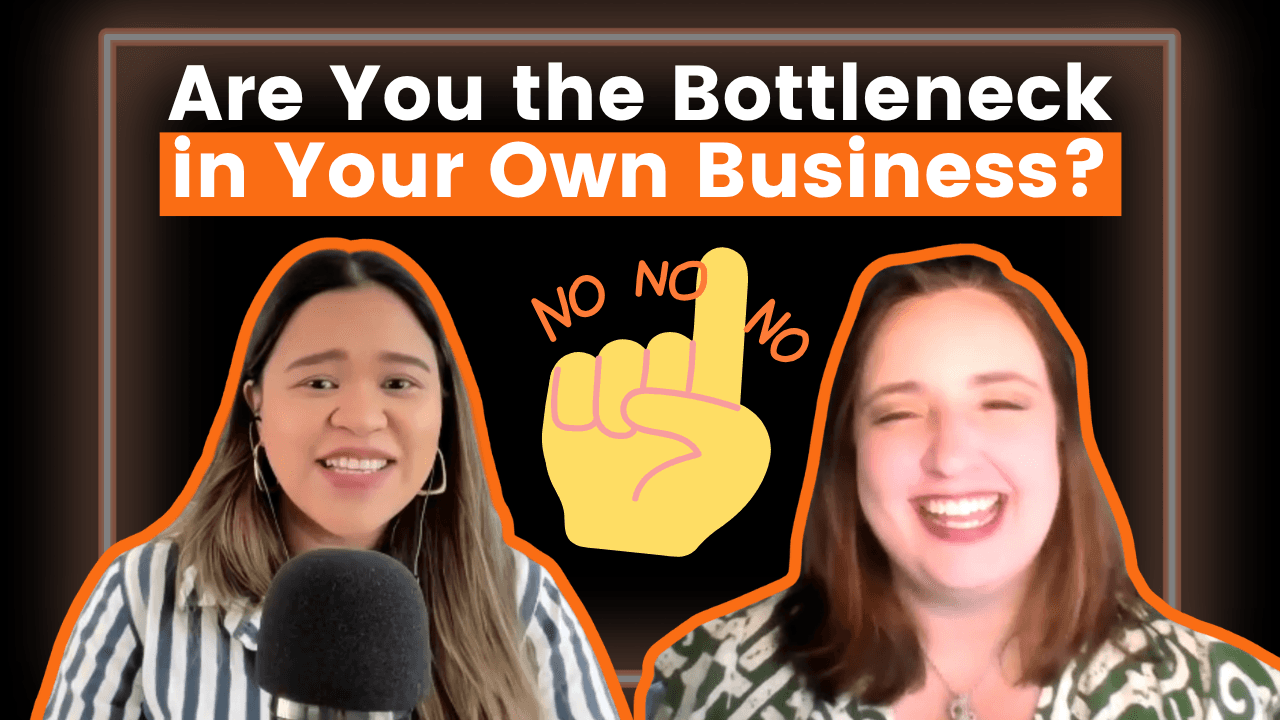
If you're still personally involved in nearly every task, it's worth asking whether you've become the bottleneck in your own business—and hiring for your weaknesses is one of the fastest ways to remove yourself from that role.
Eric explained that he didn’t start a company so he could work 18 or 20 hours every day. He wanted to create impact, provide value to clients, support his family, and build something meaningful.
That requires a team.
For many founders, that eventually means bringing in someone who can own execution while the CEO focuses on vision—which is exactly why every CEO needs a right-hand person (and when to hire a COO) once the business outgrows what one person can run alone.
For entrepreneurs seeking business growth, one of the biggest transitions is moving from doing to leading. Your job gradually changes from personally executing every task to making sure the right people, systems, and priorities are in place.
This is also where business coaching and business mentorship can become valuable. A founder who is deeply involved in daily operations may struggle to objectively see what should remain on their plate and what needs to be delegated.
The goal isn’t simply to get more done.
The goal is to build a business that can operate without everything depending on you.
How Do You Know What Your Entrepreneurial Weaknesses Are?
Before you can hire for your weaknesses, you have to identify them.
Eric’s experience provides a simple framework: become clear about where you naturally excel and where you consistently struggle.
Ask yourself:
- What parts of the business give me energy?
- What am I consistently good at?
- What responsibilities keep falling through the cracks?
- Which tasks take me significantly longer than they should?
- Where does my team constantly need to remind or support me?
- What am I holding onto simply because I’m the owner?
- What could someone else realistically do better than me?
The goal isn’t to criticize yourself.
It’s to understand your role.
Eric even described his ideal scenario as being the “weakest one on the boat.” In other words, if you can surround yourself with highly capable people who motivate you to become better, you have the potential to create a much stronger organization.
That’s a very different entrepreneur mindset from believing the founder must always be the smartest person in the room.
Nearshore vs. Offshore vs. Onshore Hiring
Once you decide you need help, the next question is: Where should you hire?
Eric’s company helps U.S. businesses hire professionals across Latin America. During our conversation, he broke hiring into three broad categories.
What Is Onshore Hiring?
Onshore hiring means hiring workers within your own country.
For a U.S. company, that means hiring within the United States.
Eric points out that onshore talent may make the most sense when the role requires someone to physically be in an office or interact with customers face-to-face.
What Is Offshore Hiring?
Offshore hiring generally involves hiring talent in countries farther away from the business’s home market.
For U.S. companies, common offshore markets include the Philippines and India.
Offshore hiring can provide significant cost advantages and access to skilled remote professionals. For positions where working hours are flexible, it can be an effective option.
What Is Nearshore Hiring?
Nearshore hiring means hiring internationally from countries geographically closer to your home market.
For U.S. companies, Eric focuses on talent in Latin America.
One of the major advantages is time-zone alignment. Businesses can access international talent while having team members working similar hours to their U.S.-based colleagues.
The important takeaway is that there is no universally “best” location.
The right hiring model depends on the role, budget, required working hours, communication needs, and the way your company operates.
How Should Businesses Think About International Pay?
Remote hiring also raises an important question: If two people are doing similar work in different countries, should they receive identical compensation?
Eric’s approach is to consider local economics and cost of living while prioritizing ethical and transparent compensation.
He compares international differences to compensation differences that already exist within the United States. Someone living in Iowa may have a different salary from someone performing similar work in San Francisco because the economics and cost of living are different.
Eric explained that his company considers what professionals are earning in their local market and seeks to negotiate an increase when placing them with clients.
The broader lesson for entrepreneurs is that cost savings should not be the only objective.
Ethical remote hiring requires thinking about both sides of the relationship.
The company needs a sustainable financial model, while the worker should receive compensation that represents a meaningful and fair opportunity in their market.
A Bad Hire Isn’t Always an Employee Problem
One of the most valuable parts of our conversation was the discussion around bad hires.
Even though Eric works in hiring, he readily admits that he has made bad hires himself.
His experience has taught him to pay close attention to the first couple of months.
A new employee may not master a role immediately—and shouldn’t necessarily be expected to—but early behavior can reveal important indicators about reliability, communication, adaptability, and commitment.
For remote teams, visibility is particularly important.
Eric encourages his team to “be visible.”
Someone could be working incredibly hard, but if the client or leader cannot see progress and communication is poor, uncertainty begins to develop.
That makes proactive communication an essential remote-work skill.
But there is another side to this.
Sometimes the employee isn’t the problem. The leader is.
Leadership Is Part of Your Hiring Strategy
You can recruit excellent people and still create an unsuccessful team if your leadership doesn’t support them.
Both Eric and I have seen situations where expectations, communication, or management style contributed to a working relationship breaking down.
During the episode, Eric shared an extreme example of a client who repeatedly went through new hires. Eventually, after seeing the pattern continue, his company decided it could no longer solve the problem and ended the client relationship.
That story highlights an uncomfortable question every founder should ask:
If multiple capable people struggle in the same environment, is the hiring process the problem—or is something happening inside the business?
Good leadership requires self-awareness.
That may mean clearly defining roles, setting reasonable expectations, providing feedback, allowing people time to learn, and communicating with employees respectfully.
For many founders, this comes back to letting go of control, a hard lesson for entrepreneurs who are used to being the one who fixes every problem themselves.
This is where business mentoring, business coaching, and even life coaching can support founders beyond strategy alone. Growing a company often requires growing as a leader at the same time.
Sometimes Good Leadership Means Firing a Client
Entrepreneurs often talk about firing employees.
We talk much less about firing clients.
But there are situations where protecting your team matters more than keeping the revenue.
During our conversation, we both shared experiences where ending a client relationship became necessary because of how team members were being treated.
Eric’s position was clear: teams should be treated with respect and dignity.
That matters because culture isn’t defined only by how you treat your employees.
It’s also defined by what you allow other people to do to them.
Keeping a profitable but destructive client can create hidden costs: lower morale, increased turnover, damaged trust, and leadership distraction.
A sustainable business needs boundaries.
Build a Business Around the Life You Want
The conversation eventually came back to one of the central ideas behind The Lazy Entrepreneur:
Your business should support your life—not consume it.
Eric is a husband and father, and he intentionally structures his schedule so he can make room for both business and family.
He starts early, using the beginning of the morning for deep work before transitioning into time with his children. He acknowledges that some days—particularly earlier in the week—can be more intense, but he also tries to finish at a more normal time later in the week.
Working remotely gives him another advantage: his commute is essentially seconds.
That flexibility didn’t happen accidentally.
It came from thinking about how he wanted the business to fit into his life.
For founders struggling with overwhelm, burnout, or the feeling that the business owns them, mental health coaching, life coaching, business mentorship, or another appropriate form of professional support may help them examine the personal side of entrepreneurship alongside operational changes.
But there is also a practical business question to ask:
What would need to change inside your company for you to have more freedom outside of it?
Maybe you need better systems.
Maybe you need to delegate.
Maybe you need stronger boundaries.
Or maybe you need to hire for the weakness that keeps pulling you back into day-to-day operations.
Revenue Still Matters
Building a business around your life does not mean ignoring financial reality.
Eric emphasized another lesson from his years as an entrepreneur: businesses need revenue and profit.
If you don’t have a clear target market, a path to revenue, or evidence that customers are interested in what you offer, building the rest of the company becomes significantly harder.
Freedom and profitability aren’t opposing goals.
A sustainable company needs both.
The goal of the lazy entrepreneur isn’t to escape responsibility. It’s to focus effort where it creates the most value and build systems and teams that can handle the rest.
That is operational leverage.
And over time, it can create more capacity for leadership, strategy, family, and life outside the business.
The 1% Better Approach to Entrepreneurship
Eric ended our conversation with a simple idea:
Get 1% better every day.
Entrepreneurs often want immediate transformation.
We want the perfect team.
The perfect systems.
The perfect schedule.
The perfect leadership style.
But meaningful business growth usually happens through smaller improvements repeated consistently.
- Hire one important role.
- Document one process.
- Improve one leadership habit.
- Delegate one responsibility.
- Have one difficult conversation.
- Protect one boundary.
- Make one better decision.
Then do it again.
As Eric pointed out, those improvements compound. Six months or a year later, your business—and your life—can look very different.
That may be one of the most useful definitions of a lazy entrepreneur: someone who isn’t trying to do everything, but who keeps getting better at building a business that doesn’t require them to.
Final Takeaway: You Don’t Need to Be Good at Everything
Eric’s experience building three companies reinforces a lesson many founders take years to accept:
Your weaknesses don’t automatically need to become your strengths.
Sometimes they need to become someone else’s job.
Know what you do exceptionally well. Identify the responsibilities that drain you, distract you, or repeatedly fall through the cracks. Then build a team of people whose strengths complement your own.
At the same time, remember that hiring alone won’t solve every problem.
You still need leadership.
You need communication.
You need clear expectations.
You need revenue.
And you need a vision for the kind of life you’re trying to build.
That combination—strong people, thoughtful leadership, sustainable business growth, and intentional use of your time—is what turns delegation into something bigger than outsourcing.
It creates freedom.
Frequently Asked Questions
What does it mean to hire for your weaknesses?+
Hiring for your weaknesses means identifying the areas where you are not strongest and bringing in people who are better suited to handle those responsibilities. Instead of trying to become great at every part of the business, the founder focuses on their strengths and builds a team that fills the gaps. Eric Tabone explains that he is naturally strong in areas such as communication, sales, and client relationships, but he knows operational details are not always his strongest area. That awareness has helped him hire people who complement his skills and strengthen the business.
What is the difference between nearshore, offshore, and onshore hiring?+
Onshore hiring means hiring within your own country. Offshore hiring generally means hiring talent in countries farther away, such as the Philippines or India for U.S.-based companies. Nearshore hiring means hiring internationally from countries that are geographically closer. Eric’s company focuses on helping U.S. businesses hire talent across Latin America. One advantage he highlights is that nearshore professionals can often work in similar time zones to U.S. teams.
Why should entrepreneurs hire people who are better than them?+
Hiring people who are stronger than you in certain areas can help the business operate more effectively and reduce the pressure on the founder to do everything. Eric describes his goal as building a team whose strengths complement his weaknesses. When entrepreneurs stop trying to personally control every function, they can spend more time on leadership, revenue, client relationships, and the work where they create the most value.
What makes a remote employee successful?+
According to the episode, remote employees need more than technical skills. Communication, reliability, commitment, and visibility are also important. Eric emphasizes that remote team members should “be visible.” Even when someone is working hard, poor communication can create uncertainty for clients and managers. Consistently communicating progress helps build trust in a remote working relationship.
How can a business owner tell if they made a bad hire?+
Eric says business owners can often identify important warning signs within the first month or two. A new employee may still be learning the role, but that early period can reveal patterns around reliability, communication, adaptability, and commitment. However, business owners should also examine their own leadership. If multiple employees struggle in the same environment, the issue may not be hiring alone. Expectations, communication, management style, and company culture can also contribute to the problem.
When should an entrepreneur fire a client?+
An entrepreneur may need to end a client relationship when the relationship repeatedly harms the team, crosses professional boundaries, or creates a working environment that conflicts with the company’s values. Both Eric and Kristy discuss situations where protecting employees became more important than keeping the client. Strong leadership can include setting boundaries and making sure team members are treated with respect and dignity.
How can entrepreneurs build a business that supports their life?+
Entrepreneurs can build a business that supports their life by becoming clear about what they want the business to provide, hiring for their weaknesses, building the right team, and creating boundaries around their time. Eric explains that he intentionally structures his work around both business responsibilities and family. His broader advice is to have a clear vision, understand what motivates you, and focus on becoming 1% better every day.