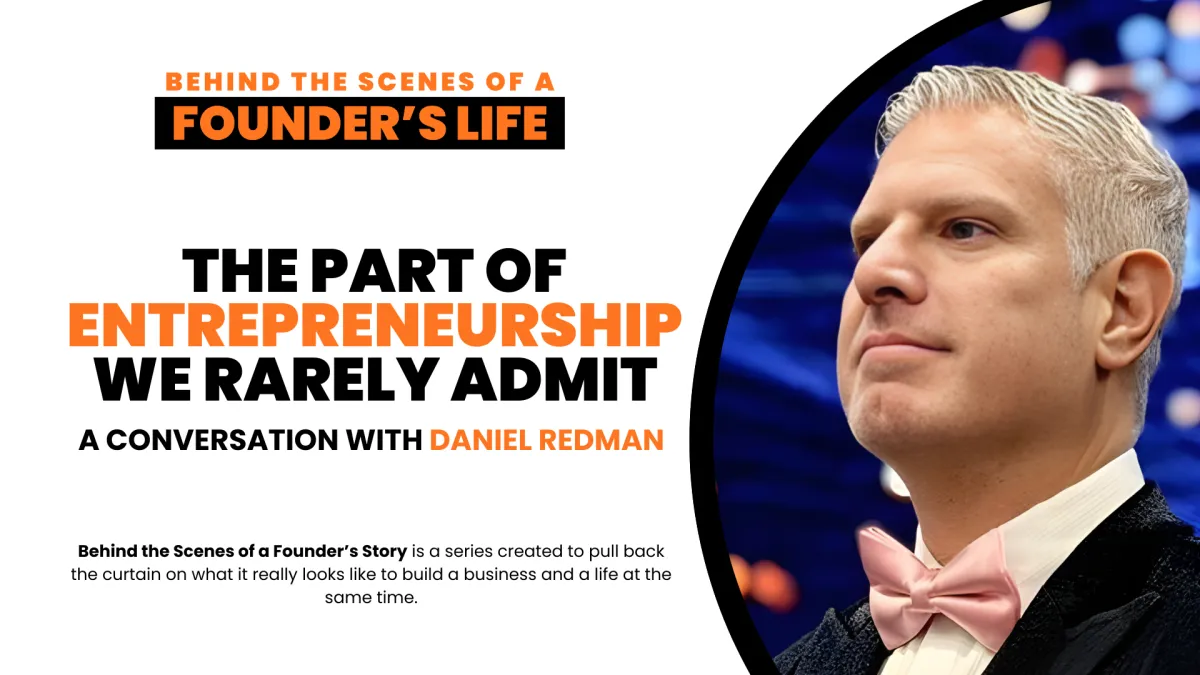
The Part of Entrepreneurship We Rarely Admit
Behind the Scenes of a Founder’s Life - Daniel Redman
I started this series because I got tired of the highlight reels.
On LinkedIn, we see the wins. The exits. The growth charts. The funding announcements. The polished photos.
What we do not always see are the doubts. The pivots. The losses. The nights when a founder wonders if they still have the stomach for it.
As a founder myself, I know how lonely this journey can feel. I moved to the United States in 2019 and built my businesses from scratch. I know what it is like to question yourself while still showing up strong for everyone else.
So this series is about the real story.
Not just what worked.
But what hurt.
Not just the success.
But the struggle behind it.
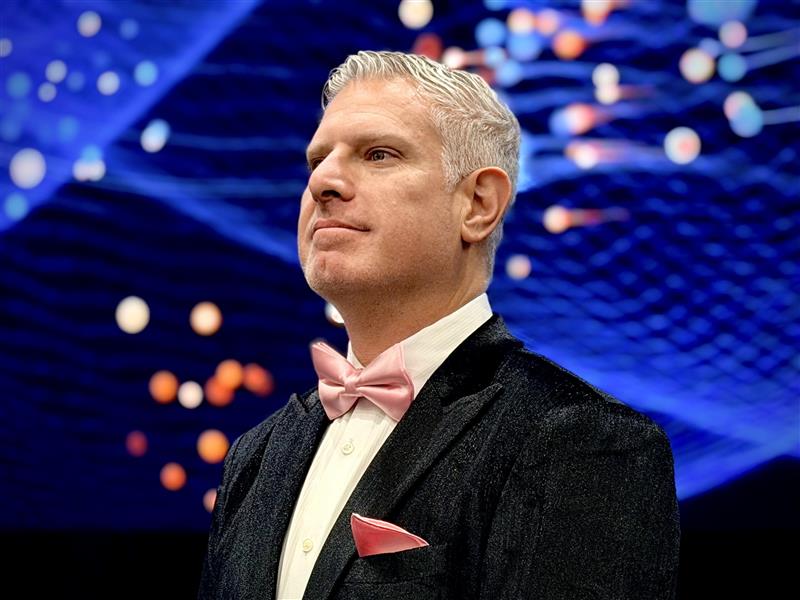
When I sat down with Daniel Redman, I knew his story would be one worth sharing.
So I asked him the simplest question first.
“Tell me about you, Daniel. What do you do?”
He laughed.
“You're hitting me with the hard questions to start, Kristy.”
Then he answered.
“I am currently a business advisor. I help small businesses leverage their most important asset, which is their people, to help fuel growth.”
He works with Insperity. He helps founders figure out how to grow without breaking their company in the process.
And when you hear his story, you understand why.
The First Business at Six Years Old
When I asked him what his first business was, he didn’t say 2006. He didn’t say 2019.
He said, “When I was six years old.”
“I was going door to door and selling paintings that I was making in my garage.”
He sold one.
“I stopped at one because I thought that was it. I hit it rich. I was like, that’s it. My job here is done.”
He just wanted to buy baseball cards.
That spirit did not come from nowhere.
He told me he comes from an entrepreneurial family.
“My grandfather owned his own car dealership in Chicago.”
“My dad was in a startup that grew to be one of the largest privately owned companies in the country.”
He grew up around people who knew how to sell. Who knew how to negotiate. Who knew how to make money.
But even then, he was a little different.
“My dad was more corporate. Go join a company, climb the ladder.”
Daniel said, “I've always been a little bit of an outcast. I like to try experimental. Not take a normal path.”
He was built for startup life.
And startup life is not calm. It is a rollercoaster.
The Ugly Sweater Company
When I asked him about the businesses he exited, he smiled.
“I was one of the first people that jumped on the ugly sweater fad.”
He owned uglysweaters.com. He sourced sweaters from thrift stores. He upcycled them. He sold them online before it was cool.
Eventually, he sold the company around 2011.
But it was not smooth.
One of his competitors went on Shark Tank.
“I was throwing things at my TV,” he told me.
That competitor landed a deal with Mark Cuban.
And suddenly, the space exploded.
“They just started dominating the space.”
SEO became harder. Ads became more expensive. Big stores like Target and Walmart started carrying similar sweaters.
Then his website got hacked.
“We lost everything on the site and had to start over.”
That was a lot.
I asked him, “Was that the point where you knew it was time to sell?”
He said yes.
“It was going to be such a big climb to get back. And I didn’t have the stomach for it.”
That line stayed with me.
I didn’t have the stomach for it.
We always tell founders to never quit. To push through. To fight.
But Daniel said something important.
“You’ve got to bring yourself into the equation and ask those hard questions. Is this the right challenge for me at that time?”
Sometimes strength is knowing when to walk away.
The Sales Automation Company
His second company was very different.
In 2019, he started a B2B sales automation company. He helped companies build cold outreach systems and fill their calendars.
He grew fast.
“I picked up 100 clients in the first two years. I was really cooking.”
During COVID, his company actually grew. While trade shows and in person networking stopped, he offered a digital solution.
He exited in 2023.
But this one hurt.
The exit was abrupt.
He was negotiating with investors. He received what turned out to be a fraudulent offer. The deal fell apart and it caused operations to stop.
“It was painful,” he said.
“I thought there was a lot more to go.”
Then he said something that felt very real.
“It was almost like losing a friend.”
He had dreams.
“I saw my son as an intern in the future of that company. I saw my logo on the side of a building.”
And then it was gone.
When founders talk about exits, we usually hear numbers.
We do not hear about grief.
But Daniel talked about grief.
And that honesty matters.
The Growth Ceiling
I asked him about the hardest part of that second business.
He said something every founder with under ten employees understands.
“You always feel two or three employees short of where you need to be.”
He had seven employees and dreamed of seventy.
He wanted to move faster. He wanted to step back from constant financial pressure. He wanted scale.
“It’s really hard to get there. To cross from under ten employees to twice that size.”
He admitted, “I can’t say I necessarily cracked that code.”
That humility is rare.
People, AI, and What Comes Next
Today, Daniel advises businesses on how to use their people better.
But he is doing it at a time when companies are asking a hard question.
Are people valuable?
Or are they replaceable by technology?
“People are very expensive,” he said.
But then he followed it with this.
“People still help a company grow. They do things that are untrainable by AI today.”
He believes companies need people. But they need the right structure. The right alignment. The right mindset.
He helps founders who have what he calls growth headaches.
Companies that are making money but not moving as fast as they want.
Companies where the CEO is stuck in work they should not be doing.
“I can free up misallocated operations issues and free up a CEO to do the things they do best.”
If He Could Have One Thing
I asked him, “If there’s one thing you wish you had today to fully achieve your vision, what would it be?”
He paused.
“Is a time machine off the table?”
We laughed.
Then he said, “Time is such an undervalued thing.”
He talked about AI helping us move faster. But he also talked about something else.
“I think the pendulum is going to swing back to personal interaction.”
People are tired of robotic content. They want real. They want live. They want human.
He said, “People long for human connection.”
He believes art, performance, creativity, and real experiences are going to matter more again.
“Innovation is art,” I told him.
He agreed.
His Advice to Founders
At the end, I asked him for advice.
He did not give a strategy.
He did not give a tactic.
He said this.
“Check your passion. Is this something you are all in? Can you push all your chips in?”
Then he said something even more important.
“Fortify your mental health.”
“What happens when doubt creeps in? How are you going to respond?”
“The rain’s going to come.”
He believes doubt and lack of resilience take down more companies than we realize.
“So much of building a startup is personal.”
Behind every logo.
Behind every exit.
Behind every growth story.
There is a human being.
Daniel Redman has thrown things at his TV watching competitors win.
He has lost websites.
He has lost companies.
He has felt grief.
He has questioned himself.
And he keeps going.
If you are a founder reading this, maybe that is the reminder you needed.
You do not need to be fearless.
You need passion.
You need resilience.
And sometimes, you need to ask yourself if you still have the stomach for the climb.
Want to Connect?
If you are a founder experiencing growth headaches, feeling stuck, or wondering how to better leverage your team, you can reach out directly to Daniel Redman to learn more about his advisory work and how he helps companies grow the right way.
Book a call with Daniel here.
Connect with Daniel on LinkedIn.
And if your challenge is execution, hiring, or freeing yourself from the day to day work, that is where we come in.
At Meet 5 Star Pros, we help founders hire high level remote operators like Online Business Managers, Marketing Project Managers, and Executive Coordinators.
At Smart VAs, we provide dedicated virtual specialists who support marketing, operations, and growth so you can focus on what you do best.
Growth is not just about pushing harder.
It is about having the right people in the right seats.
And if you are a founder who wants to share your own behind the scenes story, DM me on LinkedIn.
Your story might be the one someone else needs to read today.
Sometimes growth is not about working harder.
It is about putting the right people in the right seats.
And if you are a founder who wants to share your own behind the scenes story, DM me on LinkedIn.
Your story might be the one someone else needs to read today.
