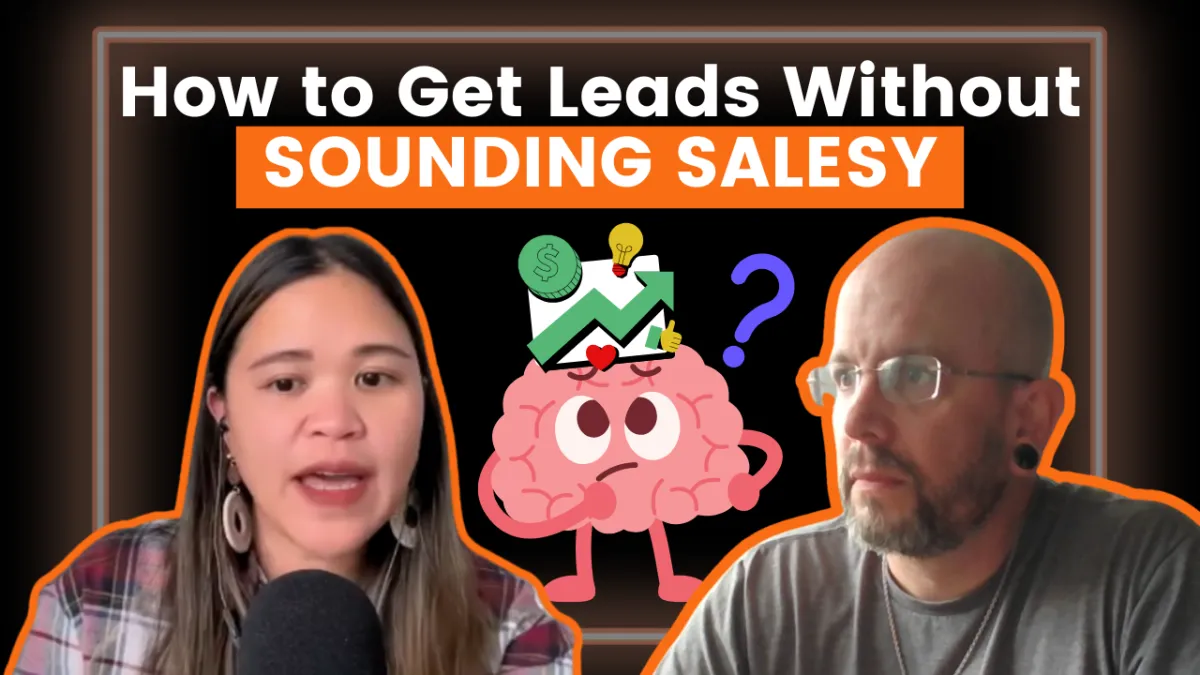
How to Build Real Relationships on LinkedIn (and Get Clients Without Sounding Salesy)
LinkedIn can feel like a noisy digital networking event — everyone’s talking, few are listening, and too many are pitching. But what if there was a smarter, simpler way to use LinkedIn — one that actually creates meaningful relationships and brings you real clients?
LISTEN ON ITUNES | LISTEN ON SPOTIFY
That’s exactly what my guest, Bryce York, founder of Factor 15, has mastered. With over 25 years in sales, Bryce helps B2B companies grow their brand and book consistent leads through relationship-first networking on LinkedIn — not through spammy sales messages.
In this episode of The Lazy Entrepreneur Podcast, Bryce breaks down how to turn cold connections into warm conversations, why most people are doing LinkedIn wrong, and how you can use automation the lazy way to make business development effortless.
LinkedIn Isn’t a Sales Platform — It’s a Networking Platform
“LinkedIn isn’t a sales platform,” Bryce says right away. “It’s a networking platform. You wouldn’t walk into a conference, shake someone’s hand, and immediately pitch them your services — so why do that online?”
He’s right. Too many business owners treat LinkedIn like cold email.
We send connection requests, get accepted, and instantly reply with:
“Thanks for connecting! Here’s what I do — let’s book a call!”
That approach doesn’t build trust. It turns people off.
“People want to be treated like human beings,” Bryce explains. “They’re inviting you into their professional circle — don’t abuse that by selling right away.”
Instead, he encourages entrepreneurs to approach LinkedIn the same way they would an in-person networking event: start a conversation, not a pitch.
Step One: Know Who You’re Reaching Out To
Before sending a single message, Bryce emphasizes the importance of knowing your Ideal Client Profile (ICP) — the people most likely to see value in what you offer.
“If your target’s off, your whole strategy’s off,” he says. “You could have the best message in the world, but if it’s going to the wrong people, it won’t work.”
That’s why his company, Factor 15, starts by helping clients identify who they should connect with — and why those people would care.
Ask yourself:
What problem do I solve that my ideal client is actively trying to fix?
Why would they want to connect with me?
What type of posts or content would they find valuable?
Once you’re clear on that, your connection strategy becomes intentional — not random.
Step Two: Send a Simple (or Even Blank) Connection Request
Here’s where things get interesting.
Most of us overthink our connection messages — trying to write the perfect 300-character introduction. But Bryce has found that blank connection requests often perform better than messages.
“We tested both,” he says. “Connection requests without messages get accepted more often. The reason? People rely on your profile for credibility, not your message.”
That means your profile — not your pitch — is your most powerful first impression.
Before sending connection requests, make sure your LinkedIn profile is:
✅ Clear on what you do and who you help
✅ Has a professional (and friendly) photo
✅ Features a banner that communicates your value
✅ Includes a compelling “About” section that speaks to your audience
When your profile does the talking, you don’t need a long introduction — people can see your credibility right away.
Step Three: Invite Them for a “Virtual Coffee”
Once someone accepts your request, that’s your cue to start the conversation.
Bryce suggests reaching out immediately or within a few days — depending on your audience — to offer a casual “virtual coffee chat.”
“The goal isn’t to sell,” he says. “It’s to get to know them, learn about their business, and find ways to collaborate or add value.”
You might send a simple message like:
“Hey [Name], thanks for connecting! I’d love to learn more about what you do. Up for a quick virtual coffee chat next week?”
It’s warm, personal, and non-salesy — exactly what builds trust.
From there, treat the call like a real conversation. Don’t go in with a hidden pitch. Instead, listen, ask questions, and see if you can either help them directly or connect them to someone else who can.
That’s how Bryce and I connected — and it’s how most of his business relationships start.
Step Four: Build Relationships, Not Pipelines
Bryce’s LinkedIn strategy is refreshingly human. He doesn’t treat every call like a “discovery call.” He treats it like an opportunity to collaborate, refer, or just connect.
“Every single one of my clients came from a conversation like this,” he says. “Not every call ends in a sale — sometimes it ends in a referral or a collaboration. And that’s the point.”
That mindset shift is everything. When you stop chasing transactions and start focusing on connections, you build a stronger network — one that continues to bring opportunities long after the initial message.
Step Five: Automate (The Lazy Way)
Let’s be honest — this all sounds great until you realize how time-consuming manual outreach can be.
That’s where automation comes in — but the right kind.
Bryce’s company, Factor 15, uses automation tools that sit on top of LinkedIn to handle the tedious parts:
Sending connection requests to your ideal prospects
Sending follow-up messages automatically
Tracking who responds and who doesn’t
Stopping the automation the moment someone replies
“Being lazy doesn’t mean being careless,” he laughs. “It means letting systems do the heavy lifting so you can focus on the human part — the actual conversation.”
With the right tools, you can nurture hundreds of relationships at once without losing your personal touch.
Why LinkedIn Works Best for B2B
So, why focus on LinkedIn in the first place?
Bryce calls it the most powerful B2B platform on the planet.
Unlike Facebook or Instagram, LinkedIn is built for professionals — people who are already thinking about business, growth, and solutions.
“It’s one of the only platforms where you can build a personal brand and directly connect with decision-makers at scale,” Bryce says.
And here’s the bonus: LinkedIn’s algorithm rewards engagement between first-degree connections.
That means when you DM someone and engage with their posts, LinkedIn shows them your content more often.
It’s a virtuous cycle: the more you interact, the more visibility you get.
So post content your ideal clients care about, comment on their updates, and become a valuable voice in your niche.
The Power of a Thoughtful Comment
Want a simple, free way to stay top-of-mind with your connections? Comment on their posts — but do it authentically.
“Don’t use generic, AI-generated comments,” Bryce says. “Be thoughtful. If you’re the only one who comments, that person will absolutely notice you.”
He shared a great story:
“One of my prospects went quiet, and then I saw he started a new job. I commented, ‘Congrats, man! Excited for you.’ He replied right away, said he saw my messages, and wanted to reconnect. Now we’re setting up a meeting.”
A single, genuine comment reopened the door — proof that small actions can lead to big results.
What NOT to Do on LinkedIn
At the end of our conversation, I asked Bryce what business owners should absolutely avoid on LinkedIn.
His answer was simple:
“Don’t be fake. Be genuine. People can tell when you’re not.”
Automation is fine. Using AI is fine. But don’t lose the human touch. The goal is to build credibility and trust — not to blast generic content or copy-paste sales scripts.
“Your professional brand will follow you everywhere,” he reminds us. “So make it something you’re proud of.”
The Lazy Way to LinkedIn Success
Building relationships doesn’t have to be complicated. In fact, the “lazy” way — building systems, automating routine tasks, and focusing on real human connection — might just be the smartest way.
Here’s the formula Bryce and I both swear by:
Define your audience. Know exactly who you’re connecting with and why.
Optimize your profile. Let it do the selling for you.
Start real conversations. Treat DMs like introductions, not pitches.
Engage genuinely. Comment, share, and connect with intention.
Automate wisely. Use tools to save time, not to spam.
If you follow that, you’ll stand out from the noise — and attract the kind of clients who want to work with you for the long haul.
Where to Find Bryce York
You can find Bryce on — you guessed it — LinkedIn.
(But don’t pitch him right away — he’ll notice. 😉)
