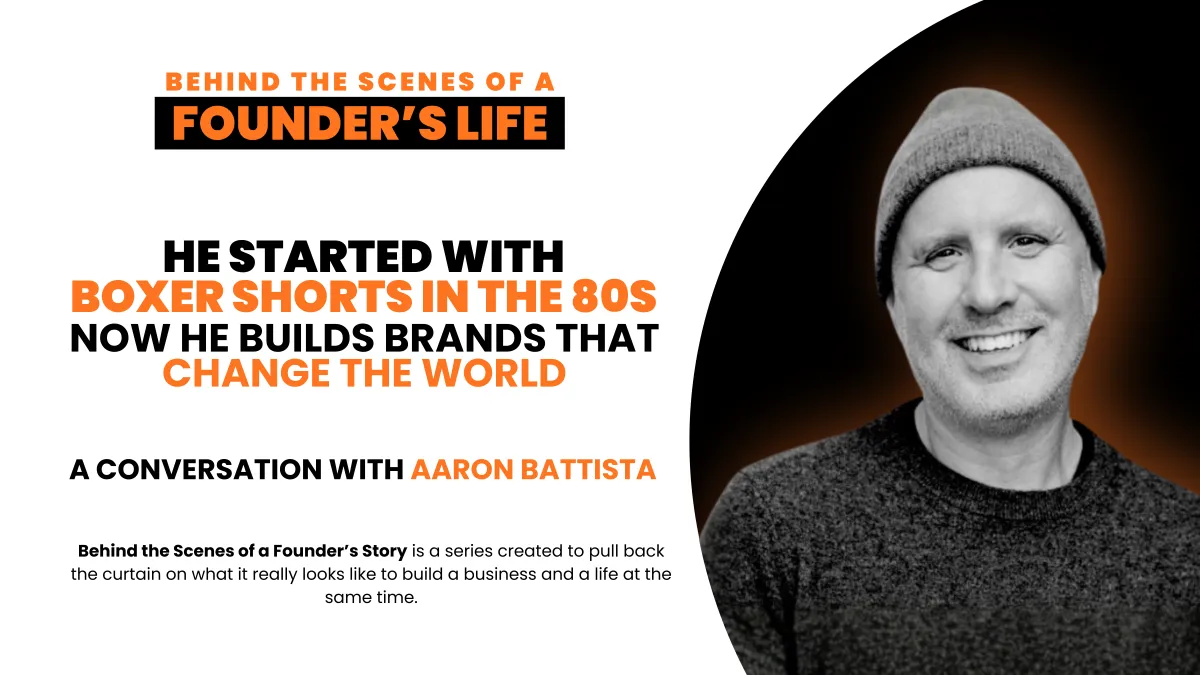
From Boxer Shorts in the 80s to Building Brands That Change the World
Behind the Scenes of a Founder's Life + Aaron Battista
I asked him how he got into this line of work.
He laughed and said he had to have an entire career before he could answer that question.
How did you get into this kind of work?
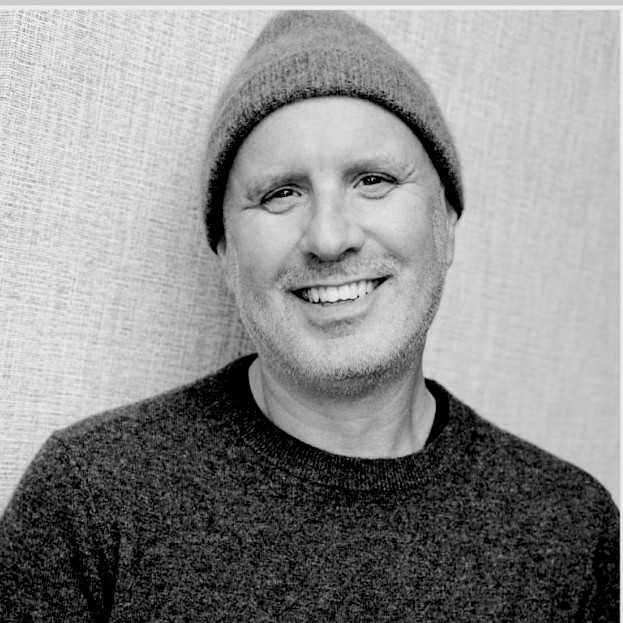
Aaron Battista is a managing partner at Ember Company, a small but mighty team that works with founders and entrepreneurs building brands under one clear mission: better for you, better for the planet.
They focus on personal care, health and wellness, fashion, children's products, and beauty. Companies that are disrupting old ways of doing things and doing it in a way that is less harmful to the world.
But the road to get there started a long way from any of that.
The Boxer Factory
In the 1980s, Aaron was a college student with an idea.
He teamed up with a clothing designer and launched a boxer short brand called The Boxer Factory.
It did not last long. School got in the way. But it planted something.
Around the same time, he was working in retail, and he discovered something about himself that would shape everything that followed.
"Being of service is really why I'm here. I enjoy it. It's been the most important aspect of who I am, to be a part of something and to be helping people."
Retail gave him that. And so did the executive training program he took joined at Jordan Marsh, a department store that pulled him right into the corporate world.
He went from boxer shorts to boardrooms. And he took notes the whole way.
The Women Who Shaped Him
I asked him about the career he built before going out on his own. And I noticed something right away about the list of mentors and influences he sent me ahead of our conversation.
Almost every name on it was a woman.
That was not an accident.
He worked alongside Anita Roddick, the founder of The Body Shop, a woman who built a global brand on the belief that business could be a force for good. He worked with Dawn Mello, one of the most respected creative minds in luxury retail. Angela Ahrendts, who transformed entire organizations through the power of culture and human connection. Suzanne Lerner, founder of Michael Stars and a fierce advocate for women's rights. Kathy Tierney and Vicki Haupt, both of whom shaped his thinking on leadership and accountability. And Dylan Lauren, who built something entirely her own and did it with creativity and intention.
"I am a female founder forward person. The power of women in business is underrated. It is a motivator for me. It is something that keeps me excited."
He said these women were not just successful. They were accessible. They made space for a twenty-something still figuring himself out. They pulled him into strategic conversations. They pushed back when he was wrong. They let him grow.
"They weren't afraid to say, you screwed up. They weren't afraid to say, I would do this differently. And if you're open and curious and you want to grow, those were great leaders."
He said those are the people he looks to be like.
What Did They All Have in Common?
I asked him if he noticed a common thread between all the great leaders he had worked with over the years.
He did not hesitate.
"They listened. They were very good at listening. They asked the right questions. They were generous with their questions."
He described sitting in quarterly reviews with finance teams, marketing teams, operations, and executives all in the same room, and watching great leaders navigate all of that without losing the thread.
They did not just ask questions to get answers. They asked questions to guide the person toward their own answer.
"I think they're asking the questions because they want you to know the answer. And if you don't, then they help you through that."
That stuck with me. Because that is exactly what Aaron does now for the founders he works with.
The Mistakes That Shaped Him
I asked him about the mistakes he made along the way, the ones that actually taught him something.
He said the biggest lesson was patience. And listening.
"When you're just starting out, you're very ambitious and very focused. But that doesn't mean you have all the answers. A lot of the mistakes I made were me going it alone and not asking for help."
He did not find a mentor early enough. He did not raise his hand soon enough. He learned the hard way that ambition without guidance can send you in the wrong direction faster than you realize.
Now he is the one raising his hand for the founders he works with. And he said he would not want to be doing anything else.
Going Out on His Own
I asked him when he actually made the move to working for himself.
He said 2013. That was when he started Battista Co., his own independent advisory practice. From there he connected with Dallimore & Co., a strategic planning group in New York. Then eventually Ember Company, where he is now most deeply engaged as a managing partner.
He still runs Battista Co. on the side for independent projects. But Ember is where most of his focus lives.
He told me going solo is lonelier than people expect.
"It's very lonely to be a consultant. It's very lonely to be a standalone advisor."
That is part of why being part of a team like Ember matters to him. He gets the freedom of working with different brands at different stages, while still being surrounded by people who are solving problems alongside him.
What Are the Biggest Challenges?
I asked him about the main challenges he has faced since 2013. He talked about the external forces that never stop coming.
The 2008 financial crisis. The pandemic. Today's tariff environment. Every few years, something shifts the ground under founders, and the ones who survive are the ones who do not pretend it is not happening.
"Mistakes get made when you stop thinking about who and where your consumer is and think that you already know. You always need to go back and check."
He said businesses have to keep returning to their core values and mission because those things drift over time, especially under pressure.
And then he said something I wrote down immediately.
"People should have the right problems at the right time. The worst thing in a business is to have the wrong problems and be solving those while the right problems are being ignored."
That line says everything about how he thinks. It is not just about working hard. It is about working on the right things.
Becoming a Retail Activist
At some point in our conversation, Aaron used a phrase that I had not heard before.
Retail activist.
He described himself as someone who wants to create leaders who care about the decisions they make about the world around them. Not just the bottom line. Not just the next quarter. But the broader impact of every choice a business makes.
That is the thread that runs through everything he does. The brands he works with at Ember. The mentors who shaped him. The scholarship he started at the University of Massachusetts. Even the boxer short company he launched as a kid.
He has always been drawn to businesses that stand for something.
"Women have to try harder. But we shouldn't be making it harder. We should be advocating for them to get more. That's how I see my role."
He said he wishes more people, more men especially, would speak up about that. Would use whatever platform they have to make it easier for the people who are already doing the hard work.
That is what a retail activist looks like in practice.
If You Could Have One Thing
I asked him if there was one thing he wished he had today to fully achieve his vision, what would it be.
He did not ask for funding or technology or more clients.
"I would like to see more people investing in talent and sending people out into the world. There is so much to be learned from different experiences, different cultures, different dynamics. There just doesn't seem to be time in organizations for that."
He believes the companies that will win are the ones willing to look beyond their own walls. Hire globally. Learn globally. Think globally.
What Is Next for You?
I asked him what was coming next for him and his business.
He said continued learning. Helping more businesses expand and grow.
The scholarship at the University of Massachusetts, which he is proud of and excited to see grow.
And maybe, one day, a book.
Before we wrapped up, I asked him what one piece of advice he would leave for founders.
He did not give a tactic. He did not give a framework.
"Ask for help. Find partners that share your vision, not just financially, but share your vision. And have clarity on what that vision is. It's much easier to tell your story when you know what it is."
Then he turned it around, the way great advisors do.
He told me I had asked great questions. That the conversation was only as good as it was because of where it was steered.
I appreciated that. But I also think it says something about Aaron.
He is the kind of person who makes everyone in the room feel like they contributed something.
That is not a skill you learn in a training program.
That is just who he is.
Want to Connect?
You can find Aaron Battista and the Ember Company team at embercompany.co. Connect with Aaron directly on LinkedIn to learn more about his work with founders and entrepreneurs.
And if you are a founder with a story behind the scenes, I would love to hear from you too. These conversations remind us that success is rarely a straight line.
And if your challenge is execution, hiring, or freeing yourself from the day-to-day work, that is where we come in.
At Meet 5 Star Pros, we help founders hire high-level remote operators like Online Business Managers, Marketing Project Managers, and Executive Coordinators.
At Smart VAs, we provide dedicated virtual specialists who support marketing, operations, and growth so you can focus on what you do best.
Growth is not just about pushing harder.
It is about having the right people in the right seats.
And if you are a founder who wants to share your own behind-the-scenes story, DM me on LinkedIn.
Your story might be the one someone else needs to read today.
Sometimes growth is not about working harder.
It is about putting the right people in the right seats.
