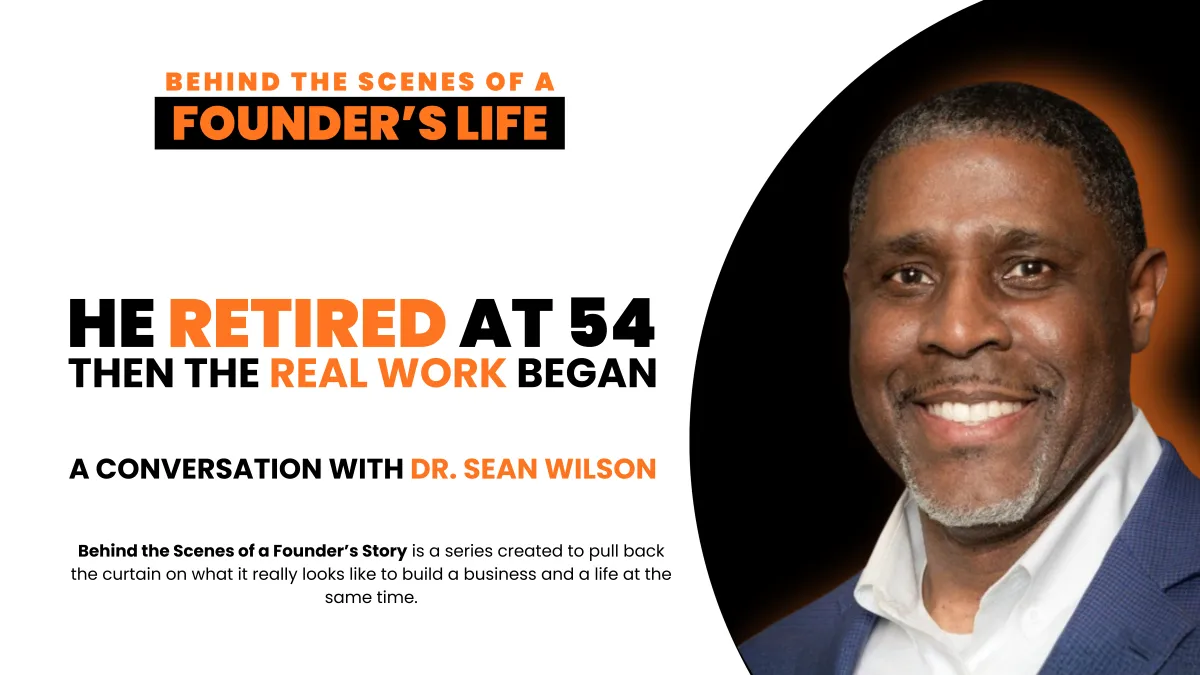
He Retired at 54. Then the Real Work Began.
Behind the Scenes of a Founder's Life + Dr. Sean Wilson
I asked him the simplest question first.
Tell me about you. What do you do?
He smiled and said he calls himself the Profit Prophet.
Not prophet as in predicting the future. Profit, as in the sense of helping organizations operate the way they were designed to, aligning mission, leadership, and financial performance.
Dr. Sean Wilson spent more than two decades leading complex organizations across education, finance, and nonprofit sectors.
"I don't just look at organizations myopically. I look at it from a wide brushstroke, because I believe that's the way you can see where the true issues are."
He helps leaders get their mission, vision, and operations all pointing in the same direction. Leadership aligned. Purpose clear. Profit following.
But before he was doing any of that, he was doing something very different.
Twenty Years In. Then a Change of Trajectory.
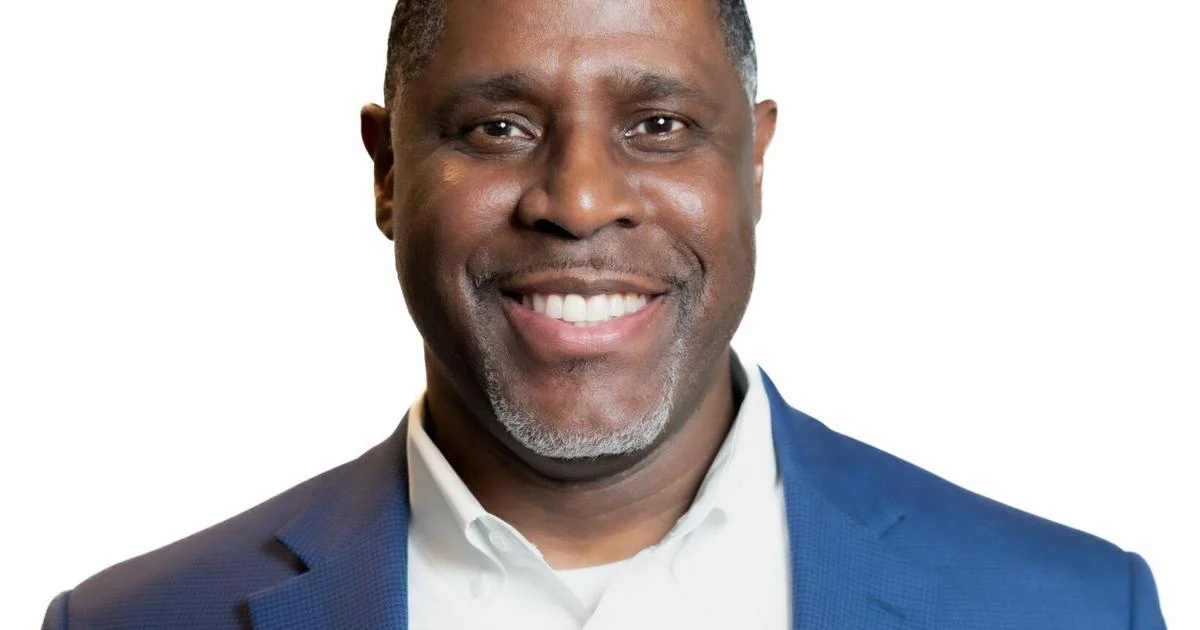
I noticed on his profile that he had already retired before starting his consulting business. So I asked him about it.
He retired at 54, just before his 55th birthday. He spent more than two decades leading mission driven organizations, including serving as CEO and Head of School for two international charter schools and later as Superintendent of Westlake Academy. Earlier in his career, he held senior financial leadership roles, including Chief Financial Officer for Christopher Homes, a large nonprofit housing organization.
When I said the word retired, he stopped me right there.
"I consider it to be the changing of trajectory more so than retirement."
He was not done working. He was done doing that work. There is a difference.
And that distinction matters, because what came next was not a vacation. It was a rebuild from the ground up.
Was It Emotional to Leave?
I pushed a little deeper on that. Because I know from people in my own life how hard it can be to walk away from something you have done for decades. The identity gets tangled up in the role.
I asked him if leaving was emotional. He was honest.
"Loss is probably the first thing that you have to deal with. Losing the routine and the regimen of what happens on a daily basis, it's totally gone out the window."
For 20 years, the calendar was set. There were systems, teams, budgets, meetings. He knew what each day looked like before it started.
And then it was gone.
He told me what helped him make peace with the transition was not a plan. It was something deeper.
"The focus was on who am I as a spiritual being. If I know who I am spiritually, it makes it easier to make decisions and not lean on the things I was accustomed to leaning on."
When the title is gone, when the institution is no longer behind you, who are you?
He had to sit with that question before he could build anything new.
Did You Know What Was Next Before You Left?
I asked him whether the discovery of what he wanted to do happened before he retired or after. Because sometimes your mind is so full while you are still in it that you cannot think clearly about what comes next.
He laughed a little and said no. He did not have a plan.
"I started to move more intentional around exiting the organization than I did on what I was going to do next."
His last day was around May 24th. And his plan for that first day of freedom was simple.
"I'm just going to sleep for a week. Just rest. Get some things out of my system."
That week turned into a month.
Then around the end of June, he picked up a notebook. Then another. And another. Pages full of possibilities. Directions he could go. Things he could offer.
Eventually, one path became clear. He had spent decades coaching people inside large organizations. He could do that same work from the outside.
And so he did.
What Were the Biggest Struggles Starting Out?
I asked him about the hardest parts of building a consulting business from scratch. He did not sugarcoat it.
"In the first three months, it was nothing. No contracts, no phone calls. Everything I was doing was money out of my pocket."
After 20 years of a steady paycheck, that silence is loud.
He had to learn a completely different relationship with money. Not just how to earn it, but how to stretch it.
"If I made $5,000, the question was, how do I make this last 12 months? You have to be really strategic around what you're doing with every dollar that comes in."
The second three months, he landed one contract. Then another. Slowly, things began to flow.
But the experience taught him that he needed multiple streams. Coaching and strategic planning were his strengths, but they were also cyclical. When those dried up, something else needed to hold the business together.
So he kept building. He kept adding services. Not because he wanted to do everything, but because he understood what staying in business actually requires.
What Lesson Has Shaped How You Operate Today?
I asked him what the most important lesson has been since starting out on his own.
He said it without hesitating.
"Nothing is ever guaranteed. Even when you're both gelling and you really have good rapport, that doesn't guarantee you'll get the business."
He has changed how he thinks about rejection. A no in an email does not mean the door is closed. It means the timing is off, or they need more information, or they are not ready yet.
"No's are never no's. Stay top of mind. I'm not here to sell you something. I'm here to be a resource for you."
He plays a long game. He shows up as someone worth learning from, not someone trying to close a deal.
And he said that shift, from seller to resource, changed everything about how people respond to him.
Much of his work now involves advising executives and boards on how to align strategy, leadership, and financial performance so organizations can grow without losing sight of their mission.
What Is Next for You and Your Business?
I asked him what he is working toward right now.
Right now he is focused on helping organizations rethink employee benefits. Many employers are struggling with healthcare costs that rise year after year.
His work centers on helping companies improve access to care while reducing unnecessary spending. In many cases, employers can reduce costs while employees gain better coverage and easier access to prescriptions and care.
"Employers save about $640 per employee per year. And the employee gets greater access with no deductibles and no co-pays."
He used his own family as the example. Their monthly prescription costs used to run around $150. Now they pay less than $5 a month.
He is spending the next six months getting that message in front of employers who do not yet know this kind of solution exists. No pressure to change their current providers. Just an overlay that makes everything work better.
He called it a no-cost solution. For the employer and for the employee.
Before we wrapped up, I asked him how I could help him get the word out.
He said the biggest thing is just reaching employers who are watching their healthcare costs climb year after year and do not know there is another option.
I told him I meet a lot of founders and business owners through this podcast and this series. If I have any referrals, I will send them his way.
He smiled and said he offers referral fees to anyone who does.
That felt like a very Sean Wilson way to end a conversation.
Generous. Practical. Always thinking about how to make it work for everyone in the room.
Want to Connect?
You can find Dr. Sean Wilson at manoaconsulting.com or connect with him on LinkedIn, Facebook, and Instagram. If you are an employer looking to reduce healthcare costs for your team without asking employees to pay more, reach out to him directly.
And if you are a founder with a story behind the scenes, I would love to hear from you too. These conversations remind us that success is rarely a straight line.
And if your challenge is execution, hiring, or freeing yourself from the day to day work, that is where we come in.
At Meet 5 Star Pros, we help founders hire high level remote operators like Online Business Managers, Marketing Project Managers, and Executive Coordinators.
At Smart VAs, we provide dedicated virtual specialists who support marketing, operations, and growth so you can focus on what you do best.
Growth is not just about pushing harder.
It is about having the right people in the right seats.
And if you are a founder who wants to share your own behind the scenes story, DM me on LinkedIn.
Your story might be the one someone else needs to read today.
Sometimes growth is not about working harder.
It is about putting the right people in the right seats.
