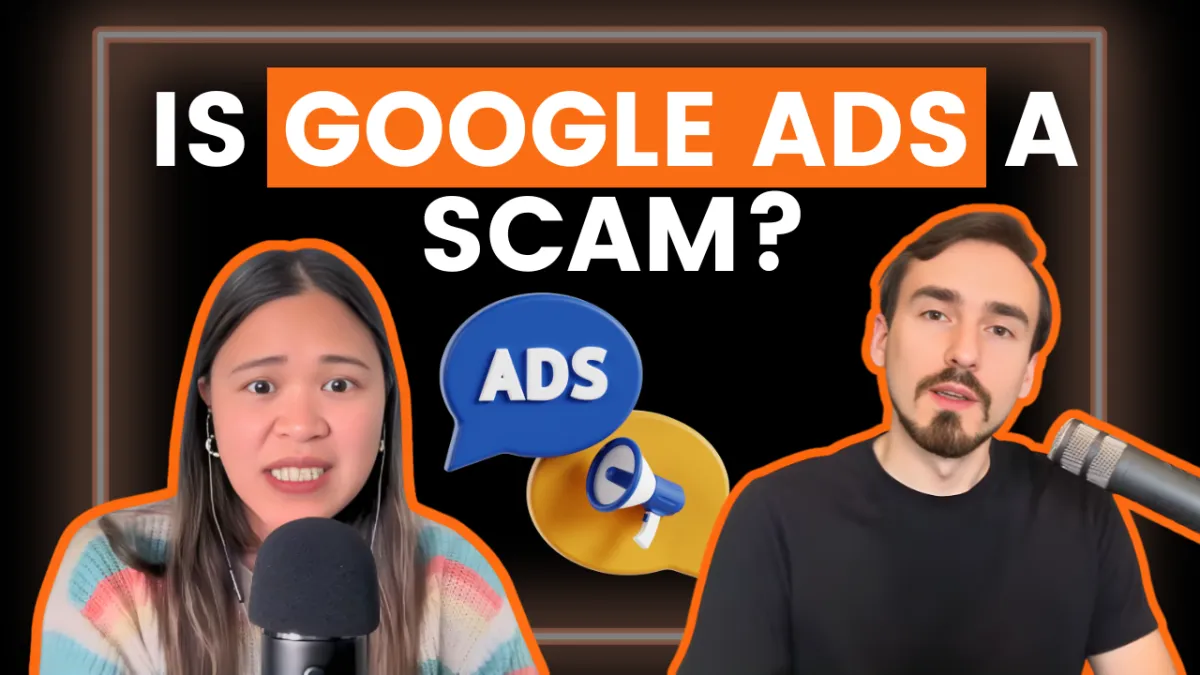
Google Ads vs SEO: How to Choose the Right Marketing Strategy
Choosing between SEO and Google Ads requires understanding your business goals, timeline, and audience. The right strategy balances long-term growth with immediate lead generation.
In today’s ever-evolving digital world, visibility is everything. But when it comes to getting your business in front of potential customers, one question always comes up: Should I invest in SEO or Google Ads?
LISTEN ON ITUNES | LISTEN ON SPOTIFY
In this episode of the Lazy Entrepreneur Podcast, I sat down with John, the CEO of StubGroup, a leading digital marketing agency helping businesses grow through Google Ads, SEO, and email marketing. John’s journey from blue-collar beginnings to leading a thriving digital agency is as inspiring as it is insightful. And in our conversation, he broke down exactly how business owners can decide where to put their marketing dollars for maximum impact.
From Blue Collar to CEO
Before becoming the CEO of StubGroup, John started out in blue-collar and customer service jobs. Over time, he transitioned into the world of marketing and joined StubGroup as one of the very first employees. Fast forward a decade, he’s now leading the entire agency and managing a growing team that helps businesses thrive online.
John admits that being a CEO is both rewarding and challenging, a balance between visionary leadership and day-to-day execution. “It’s exciting and fulfilling,” he shares, “but it’s also about keeping everything oiled and running smoothly.”
SEO vs Google Ads: What’s the Difference?
If you’ve ever searched for something on Google, you’ve seen both ads and organic results.
SEO (Search Engine Optimization) focuses on ranking organically, earning visibility by optimizing your website and content so Google recognizes it as relevant. It’s often referred to as “free traffic,” though it requires consistent effort, optimization, and patience.
Google Ads, on the other hand, are paid placements at the top (and sometimes middle or bottom) of search results. You pay per click, which gives you immediate visibility, but only as long as your ad spend continues.
So, which one is better? John says it depends on your goals and timeline.
“If you need results fast, go with Google Ads. But for long-term growth, SEO is key. The best strategy is often a combination of both.”
When to Choose SEO Over Ads
SEO is a long-term play. It takes months of consistent content creation, backlink building, and optimization to climb the rankings. But once your website ranks, it can bring a steady stream of traffic without ongoing ad spend.
John emphasizes that SEO works best for businesses with long-term vision, patience, and the ability to invest in content creation.
However, SEO can be competitive, especially if you’re up against massive websites with high domain authority like Google, Reddit, or Forbes. That’s where paid ads can help fill the gap while you build your organic presence.
When Google Ads Make Sense
If your business needs leads now, Google Ads can get you there.
“Ads are ideal when you can’t wait six months for SEO to pay off,” John explains. “You can start generating leads within days if your campaign is set up correctly.”
He also points out that Google Ads let you compete on a level playing field. Even smaller businesses can appear alongside big brands if they target strategically and optimize their campaigns.
But here’s the catch: you need to invest enough to collect real data and make informed adjustments.
“Don’t start with less than $2,000 a month,” John advises. “If you spend too little, you won’t get enough data to know what’s working. You can’t optimize what you can’t measure.”
The Funnel Strategy: Search, Retargeting, and Awareness
John explains that successful Google Ads strategies are built like funnels:
Start at the bottom – Use search ads to target people who are actively looking for your service right now.
Add retargeting – Show ads to people who’ve visited your site but didn’t convert.
Build awareness – Use YouTube, Display, or Gmail ads to reach new audiences and keep your brand top of mind.
Each campaign type plays a role in turning strangers into loyal customers.
How AI Is Changing Search
We also explored how artificial intelligence and ChatGPT are reshaping how people search for information. Many users now go straight to AI tools instead of Google for answers.
Google’s response? Integrating AI into search results through “AI overviews” and its own model, Gemini.
But this change also raises new challenges for businesses that rely on SEO. Organic results are getting pushed further down the page, meaning it’s becoming harder to get seen without paid ads or AI optimization strategies.
“We’re in a fascinating time,” John says. “Businesses now have to think about how they can show up not just on Google, but inside AI-generated results.”
Budgeting Smart for Google Ads
So, how much should you spend?
John recommends starting with at least $2,000 per month for most businesses. However, smaller or niche markets can work with less if competition is low.
He explains that the key is balance: spend enough to test, track results closely, and adjust based on data. The goal isn’t just traffic, it’s profitable traffic.
Is Google Ads Right for Every Business?
According to John, Google Ads work best for businesses that people actively search for online, like home services, local businesses, and B2B companies.
For visual or impulse-driven products, though, like fashion or beauty, it’s better to focus on platforms like YouTube, Instagram, or Google’s Display Network for brand awareness.
“Ask yourself,” he says, “are people looking for my service, or do I need to show it to them first?”
Leadership Lesson: Hire Slowly, Fire Quickly
As we wrapped up, I asked John a reflective question from my previous guest: What’s one personal development lesson you’ve learned in operating your business?
His answer was simple but powerful: “Hire slowly, fire quickly.”
“I love people and want to give them grace,” he admits, “but keeping the wrong person hurts everyone, the team, the client, and even the person who’s not a fit.”
It’s a reminder that building the right team is one of the most important parts of sustainable growth.
This episode is a masterclass in smart digital marketing. Whether you’re trying to choose between SEO and Google Ads or looking to make your current campaigns more effective, John’s insights offer clarity and strategy in a noisy online world.
The big takeaway? There’s no one-size-fits-all solution.
It’s about understanding your business goals, your audience’s behavior, and your resources—and then creating a strategy that connects them all.
Because at the end of the day, marketing isn’t about spending more. It’s about spending smarter.
Ready to Get More Leads from Google?
If you’re an overwhelmed entrepreneur who wants sustainable business growth, stronger systems, and real freedom, I offer business coaching and mentorship designed for founders who want to scale without burning out.
This is for the lazy entrepreneur who values clarity, structure, and long-term profitability.
👉 BOOK A FREE CONSULTATION HERE.
Build your business strong before you step away.
Frequently Asked Questions
What is the difference between Google Ads and SEO?
Google Ads is a paid advertising strategy where businesses pay per click for immediate visibility in search results. SEO (Search Engine Optimization) focuses on ranking organically by optimizing website content and structure for long-term traffic growth.
Which is better: SEO or Google Ads?
It depends on your goals. Google Ads is ideal for fast results and immediate lead generation. SEO is better for long-term, sustainable traffic growth. Many businesses benefit most from using both strategies together.
How long does SEO take to show results?
SEO typically takes 3 to 6 months to show measurable improvements, depending on competition, industry, and content quality. Highly competitive markets may take longer to see significant rankings.
rHow quickly can Google Ads generate leads?
Google Ads can generate leads within days if campaigns are properly structured and funded. However, optimization and testing are required to improve performance and profitability over time.
Where to Find John
🌐 Website: StubGroup.com
📺 YouTube: Search StubGroup for free marketing tutorials and insights.
